Why It Matters
Not all Christmas lights are created equal. Here's why the glow matters, why quality lasts, and what separates a proper lighting system from a sealed light string destined for landfill.
The Science of Atmosphere
There's a reason Christmas feels different depending on the lights in the room. It isn't nostalgia alone; it's physics, and the way human vision responds to warmth and colour temperature.
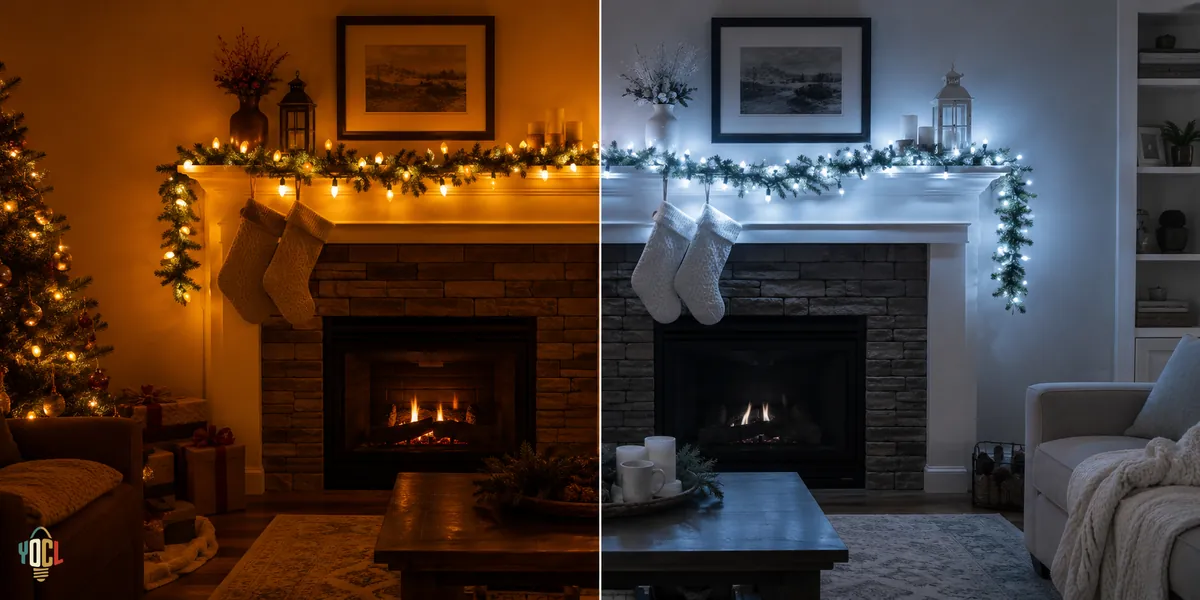
Traditional incandescent C9 bulbs emit light at around 2,200–2,700K, the same warm amber spectrum as candlelight and firelight. These are the tones human vision has evolved around for thousands of years. They're perceived as intimate, inviting, and safe. They make a room feel like somewhere you want to be.
By contrast, the blue-shifted light of modern LEDs (typically 4,000–6,500K) sits in the cool and daylight range. It's clinical, efficient, and excellent for task lighting. But a Christmas tree lit with cool-white LEDs has a fundamentally different quality: brighter isn't warmer, and brighter isn't better when the goal is atmosphere.
Our C9 LEDs are engineered specifically to replicate the warm filament glow of vintage incandescent bulbs; without the heat, the fragility, or the energy cost. The result is the quality of light that people grew up with, delivered through a modern, safe, and energy-efficient system.
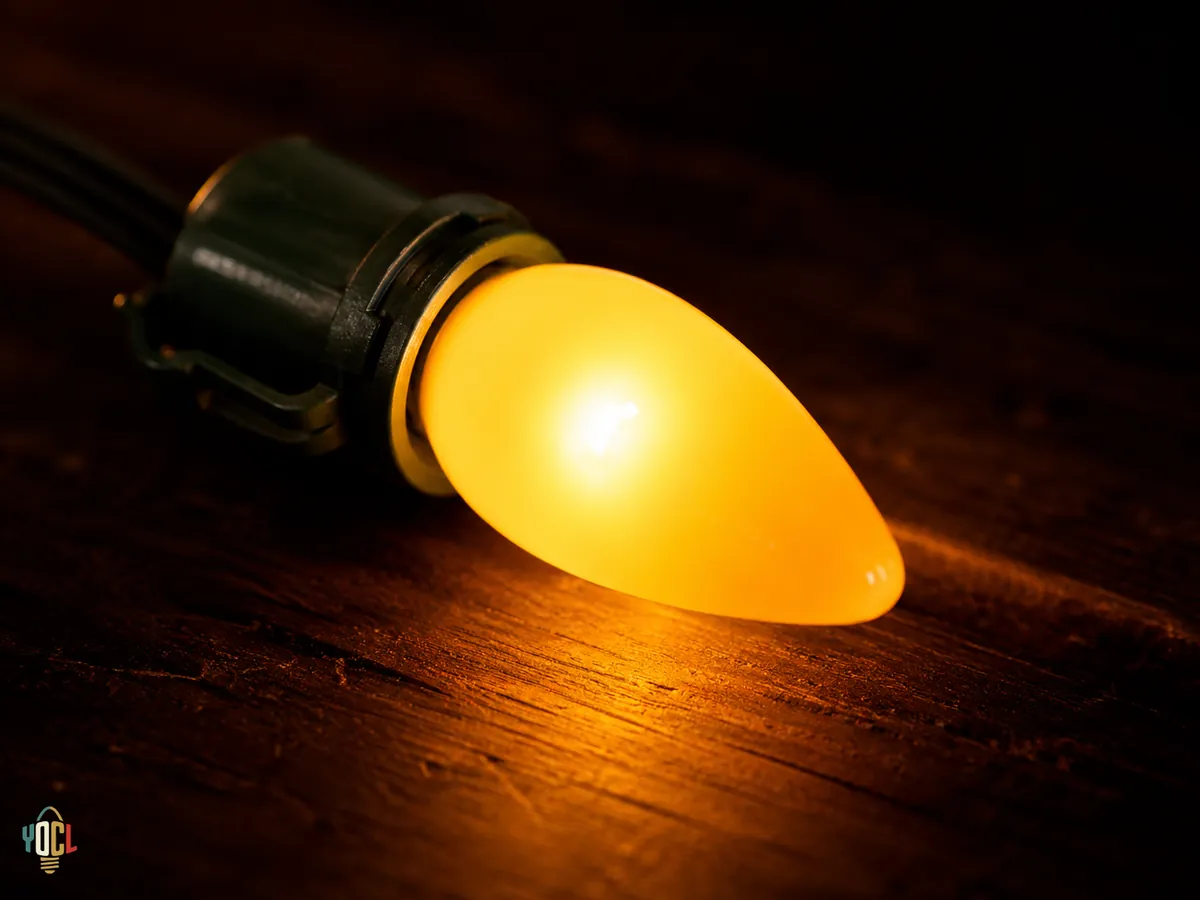
The warm amber glow of a C9 bulb: a colour temperature no cool-white LED can replicate.
Bright isn't the same as beautiful. The lights that defined Christmas for generations weren't chosen for their lumen output — they were chosen for the feeling they created.
— Andrew Rader, Ye Olde Christmas Lights Co.
By the numbers
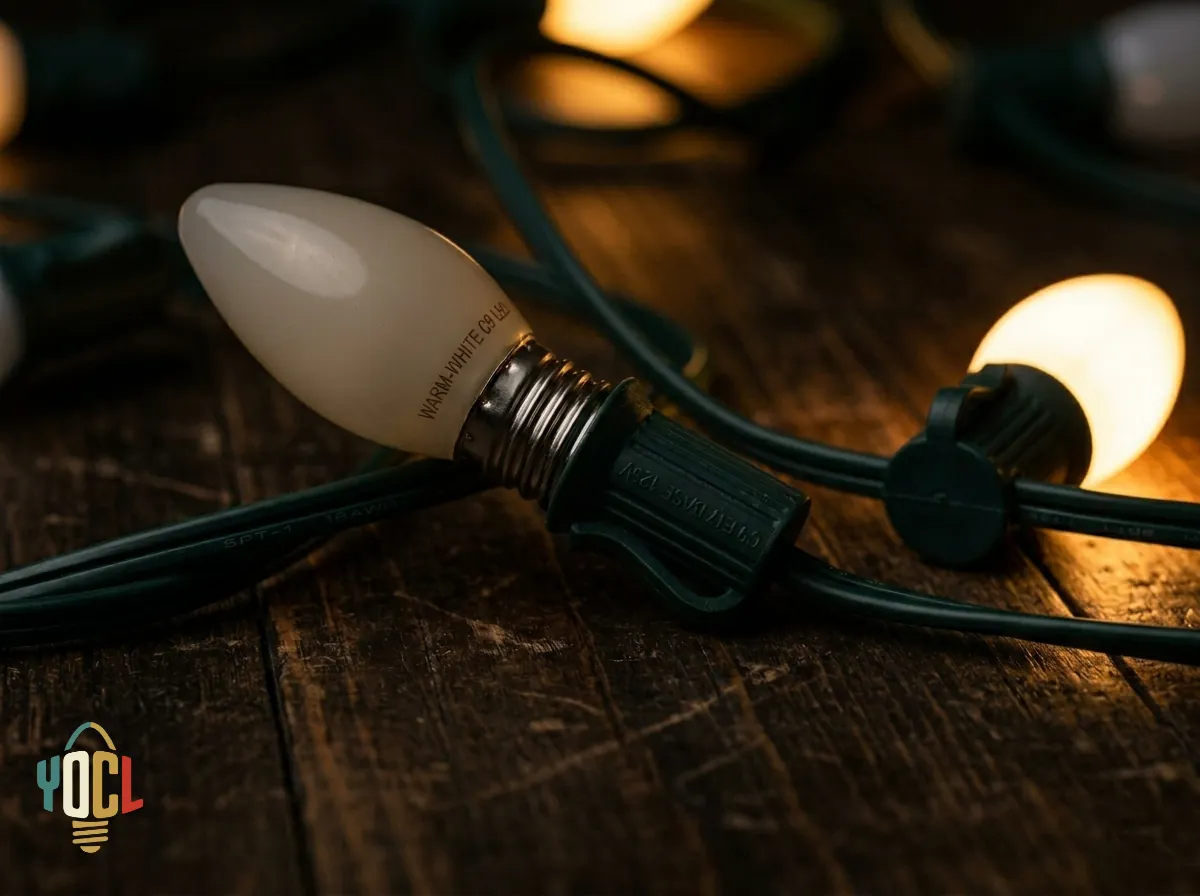
Each bulb screws into a weatherproof socket; swap colours, replace a dead bulb, or reconfigure your entire run without replacing a metre of wire.
Built to Last
Walk down the Christmas aisle at any major Australian retailer and you'll find the same thing every year: sealed, pre-wired LED strings where the bulbs are fused directly into the housing. When one fails (and they will) either the whole string goes with it, or you're left with random dead lights across your displays. Back in the box, back to the bin, back to the store for a replacement you'll throw away again next December.
Our C9 sets work differently. The heavy-duty SPT-1 wiring harness has individual sockets spaced along its length. Each bulb screws in and out independently. A dead bulb is cheap and easy to replace. A colour you want to change? Swap it in seconds. Want to mix and match warm white with red and green? That's exactly the point.
The power supply is a separate, 24V safe, low voltage transformer, the same safe-voltage architecture used in commercial lighting installations. It doesn't age out with the string; it's a standalone component rated for repeated use. The wiring harness itself is heavy-duty PVC over copper, not the thin-gauge wire you'll find inside a $12 fairy light set.
This is a lighting system. You buy it once, you store it properly, and it comes back out every year for as long as you want it to.
Each C9 bulb screws into its own socket. One dead bulb doesn't affect the rest of the string, just replace the single bulb.
Mix Opaque and Jewel Tone bulbs in any combination along the same cord. Change your colour scheme from year to year without buying a new set.
The transformer is a standalone component, not embedded in the string. It can be replaced independently if ever required.
Connect multiple sets end-to-end to cover staircases, mantles, window etc (up to 3x sets) without multiple power points.
The wiring is built to heavy-duty standards, not the thin-gauge wire inside cheap fairy lights that degrades after 1 season.
Buy it once. Store it well. Bring it out every year. No more replacing sealed strings that fail after one or two Christmases.
The same scene. Two completely different feelings. Warm amber C9 glow on the left, cool blue-white string on the right.
Side by Side
The Bottom Line
There's a certain irony to Christmas lights being the most disposable item in a season that's supposed to be about tradition. The average Kmart or Big W string lasts one, maybe two Christmases before a bulb failure in a sealed unit makes the whole thing redundant. Year after year, Australians are buying the same strings and binning the same strings.
That's not how lights used to work. C9 strings from thirty years ago, built the same way ours are, with proper sockets and individual replaceable bulbs, were passed down. They were the kind of thing you'd find coiled up in the garage at your parents' house, still working, still glowing the same amber they always had.
We're not in the business of selling you the same lights twice. Our C9 sets are built to last, priced to reflect the quality of the hardware, and designed so that every component can be maintained rather than replaced. If a bulb dies in five years, you buy a bulb, not a new string.
The glow is warmer. The build is heavier. The system is smarter. That's the difference.
We're not in the business of selling you the same lights twice. Buy it once, store it right, and the tradition is now yours.
— Andrew Rader, Ye Olde Christmas Lights Co.
Ready to Make the Switch?
Opaque Collection from $TBA · Jewel Tone from $TBA · Ships Australia-wide